From Texas trails to the Camino de Santiago, what I learned about endurance, faith, and becoming stronger than I thought possible.
In 2022, I embarked on a journey I never thought I’d be able to do.
Ten years earlier, my mom told me about the movie The Way and casually suggested I watch it. So, of course, I did.
My mom has always had a subtle way of influencing me—planting seeds without pushing, never forcing, just letting ideas take root until I was ready to discover them on my own. She’s done this throughout my life.
During my last serious relationship, there was a lot of drinking and partying. One day, she gently suggested I watch Days of Wine and Roses. Fast forward 14 years—I’m no longer in that relationship, and I don’t drink anymore.
But let’s get to the good stuff.
So what do you need to hike the Camino de Santiago?
Tools.
Training.
Tenacity.
After watching The Way, I remember thinking, There’s no way I could ever do that. But as the years passed, the idea quietly embedded itself in my brain. I told myself, I’ll do it for my 60th birthday.
Then life threw me a curveball.
I was working for a company whose grand opening kept getting delayed. After six long months of waiting, I decided to move on and join a similar company. I was there exactly one month when they fired me—on a Friday, at 2 p.m.
In that moment, I thought, I’m 56 years old. Why am I waiting until I’m 60?
I pulled up my American Airlines app and checked my miles. Sure enough, I had enough miles for a round-trip flight to Spain.
By 3 p.m. that day, my Camino adventure was officially happening.
Here’s the truth: I had no idea what I was doing.
I booked the flight… now what?
I started Googling Hiking the Camino de Santiago. I fell down the rabbit hole of websites, blogs, YouTube videos—information overload at its finest.
Then I called my second cousin, Sue Ellen. She had hiked the Camino a couple of times and immediately said, You need the book A Pilgrim’s Guide to the Camino de Santiago (Camino Francés).
This book is the Camino Bible. Most pilgrims use it to understand each stop, build routes, and learn what they’ll need and see along the way.
So—next step—buy the book.
While waiting for it to arrive, I started searching Booking.com, looking at albergues, hostels, and small hotels along the route. I found a site called Follow the Camino and studied how they planned routes—but I was determined to do this on my own.
I wasn’t going to have anyone do it for me.
I am woman, hear me roar.
(That confidence? I inherited it from my mother.)
I planned my route, booked my albergues, and mapped out over 30 days on the trail. Every night was accounted for.
Then came the gear.
Next stop: REI.
I had no formal training, minimal hiking experience, and zero gear—other than what I’d learned from watching The Way. I didn’t own a single piece of hiking equipment.
At the time, I was about 25 pounds overweight and hadn’t worked out consistently. Post-menopause had changed my body in ways I was still learning to navigate. (Spoiler alert: that’s no longer the case.)
It was early June. My trip was scheduled for mid-July.
That gave me five weeks to figure everything out.
I was told I needed hiking boots to support my ankles, so I went on a crusade to find the “perfect pair.” I tried on countless boots, bought merino wool socks, and eventually picked up trail runners. I was told to bring two pairs of shoes plus flip-flops.
The REI staff became my new best friends. I made six different trips.
On one visit, an associate helped properly fit my backpack—critical for the Camino. You also have to decide whether you’re carrying everything yourself or using luggage transfer services.
Meanwhile, life intervened again.
We had a family emergency with my brother Mike. Then my presentation, Testosterone: The Next Drug Epidemic, was accepted by the Texas Association of Addiction Professionals conference.
Another change. Then another.
My Camino—originally planned from St. Jean Pied-de-Port—was now starting in Pamplona, Spain, considered the second leg of the Camino Francés. There are eight legs total.
I was disappointed not to walk the entire route, but deeply grateful I could be there for my brother—and thrilled my presentation was accepted. A huge professional win.
After canceling and rebooking accommodations twice, I finally let Follow the Camino handle the reservations.
They were excellent—five stars—but there’s a trade-off. Once you’re on the Camino, you meet people. You may want to change plans. When your rooms are pre-booked, flexibility disappears.

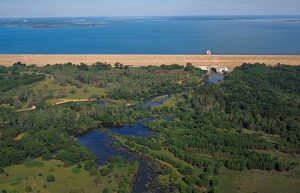
Lake Lewisville and Dam – U.S. Army Corps of Engineers (Public Domain)
I live near several lakes in the Dallas–Fort Worth Metroplex, so I downloaded the AllTrails app.
My first hike: 3 flat miles at Lake Lewisville.
Then 5 miles at Grapevine Lake.
Then 8 miles.
Then 10 miles—in 100-degree heat.
That’s when I learned about prickly heat—an itchy, painful rash caused by clogged sweat ducts.
But I kept going.
Deep down, I knew: If I can do 10 miles, I can do the Camino.
Or so I thought.
On July 30, 2022, I flew to Pamplona, Spain—about to begin what would become the greatest adventure of my life.
From the moment I arrived, I felt a deep sense of peace. Pamplona felt safe. Familiar. Grounding.
Pamplona is known for the Running of the Bulls. Had I kept my original schedule, I would’ve been there for it. Ernest Hemingway also felt drawn to Pamplona—writing The Sun Also Rises there. His presence lingers in places like Café Iruña, where I stopped… minus the drinking.
July 31st: Day One of the Camino.
The Camino is a spiritual pilgrimage—the Way of St. James—a network of ancient routes leading to Santiago de Compostela, where Saint James the Apostle is believed to be buried. For over 1,000 years, pilgrims have walked these paths for faith, healing, reflection… or adventure.
And yes—some for partying.
I had no idea how much drinking happened on the Camino.
Within the first mile, I started throwing up.
I had foolishly started a new supplement—berberine—on the trip. Yogurt plus berberine did not sit well.
Pilgrims behind me immediately stopped to help. That’s the thing about the Camino: even when you’re walking solo, you’re never alone.
I felt like Martin Sheen in The Way—throwing up, dropping my sunglasses into a creek, then laughing.
It was all part of the adventure.
I met the Three Amigos: Mani from Ireland, Ben from South Carolina, and Lynn from Canada. We bonded quickly and exchanged WhatsApp numbers. Even though we all walked for different reasons, we became a safety net for one another.
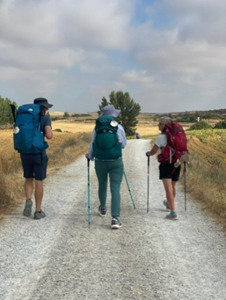
Mani introduced me to Camino Ninja, an app that shows routes, elevation, distances, and accommodations. Most pilgrims don’t pre-book—each morning they decide how far they’ll walk.
My rooms were booked, but the app helped me track distance and terrain.
Then my feet swelled.
So much that my boots pinched my little toe. I couldn’t make it eight miles without pain. I started taking taxis between stops—but I didn’t fly across the world to ride in taxis.
That’s when I met Dave and Mike, two Royal Marines.
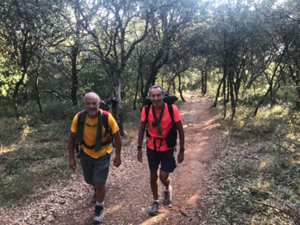
Total badasses.
They hiked in formation—disciplined, focused. Without telling me, they placed bets on whether I’d finish.
(Spoiler alert: I won.)
One day, desperate for foot relief, I bought a rolling pin from a small shop. When the Marines caught me rolling out my feet, they lost it laughing.
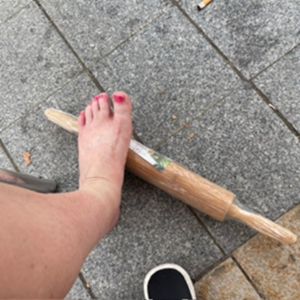
That’s how I earned my Camino nickname:
Mary Poppins.
Umbrella. Rolling pin.
“What else is in that backpack?!”
I embraced it.
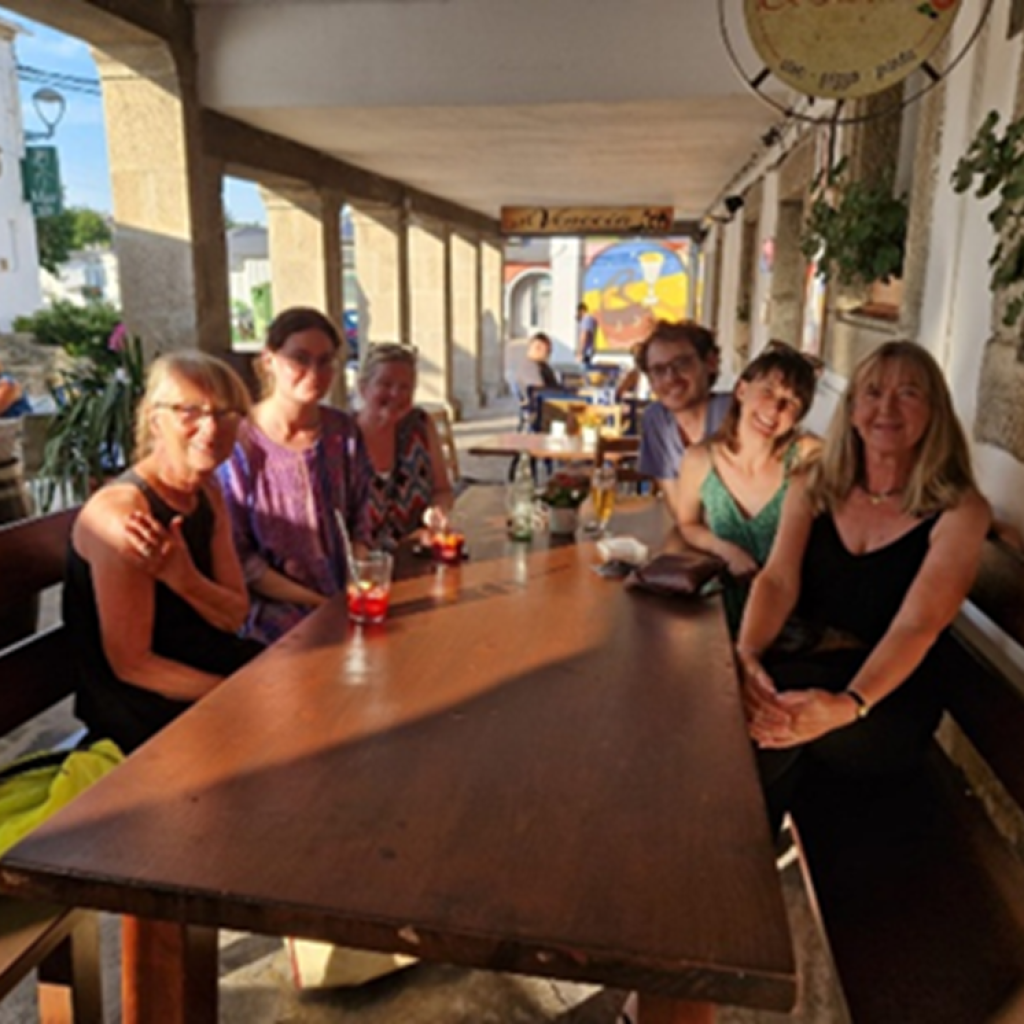
There will be moments you want to quit. Your feet will hurt. Your body will protest.
But if you keep going, you’ll learn something profound:
You are stronger than you think.
Every step taught me something—about resilience, surrender, shadow work, and putting one foot in front of the other when life feels heavy.
I met Henry and Georgia from Germany, Chris the Aussie, and Anna—Chris’s 77-year-old mom—who hiked the final 100k with him. Adventurous spirits everywhere.

And then I met Andy.
Like Lynn, he was from Canada too—but from the other side of the country. He was traveling solo, just as I was.
The Camino has a way of bringing people together who are all walking for their own reasons. Some are searching, some are healing, some are simply answering a call they don’t fully understand.
Andy was hiking through his grief, walking it out one step at a time, all around the world.
It’s not just a walk — it’s a reckoning. A reset. A return to yourself.
Pack light. Trust the process. And remember: tools, training, and tenacity.
And if you bring a rolling pin… you might earn a nickname too. 😆
Let’s talk about the practical side of the Camino—because while the journey is spiritual, your feet don’t care about that. They want comfort, protection, and smart choices.
This is important: your feet will swell. Hiking boots are rigid and unforgiving. Trail runners allow for expansion, flexibility, and comfort over long distances.
Buy trail runners one full size bigger than your normal shoe size.
Here are my personal recommendations from my favorite local store, Trailhead Running Supply in Flower Mound:
My go-to trail runner now. Excellent cushioning with a wide toe box—critical for me because I have a nerve issue in my big toe.
These quite literally saved my Camino. If I hadn’t switched to Altras, I would not have finished.
A solid trail runner with great grip. I loved them, but had to stop wearing them due to my toe issue.
These are my everyday walking shoes now. Lightweight, comfortable, and easy on tired feet.
No affiliate links. Just real recommendations from my Camino experience.
This is not something you want to guess on. Your backpack choice depends on whether you’re:
Get professionally fitted. If you’re carrying your pack daily, weight distribution matters more than you think. A poorly fitted pack can ruin your shoulders, hips, and back fast.
Absolute gamechanger.
They improve balance, reduce knee strain, and help on descents. I don’t hike without them now.
Many pilgrims buy poles once they arrive in Spain. I chose to bring mine from home—and I didn’t check a bag. They stayed with me the entire time and were worth it.
These are magic.
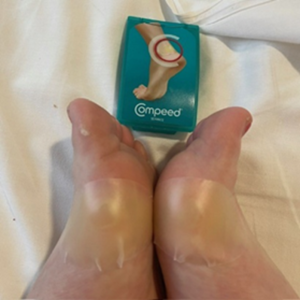
Most pilgrims will get blisters. It’s not if, it’s when. Compeed patches protect, cushion, and heal. Be prepared before your feet revolt.
This was a lifesaver.
Apply it before you hike to reduce friction and hot spots.
👉 HikeGoo Blister Prevention Balm (Amazon)
If you’re staying in albergues, you’ll want non-slip shower shoes. Wet tile floors are no joke, and neither are shared showers.
Spain in the summer is no joke. Protect your skin. Every day.
I broke mine. Then replaced them. Then broke them again.
After the Camino, I discovered Goodr sunglasses—lightweight, affordable, and hard to break. Highly recommend.
👉 Goodr Sunglasses (Trailhead Running Supply)
Pack light. Seriously.
My essentials:
Laundry happens often on the Camino. You don’t need more than this.
Your socks matter more than your shoes.
I completed the Camino de Santiago and earned my Compostela—well, at least 453 miles of it.
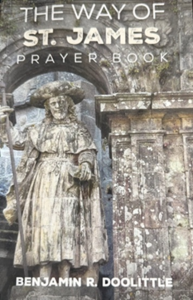
The Way of St. James is deeply spiritual and profoundly transformational. One thing I brought with me—and practiced daily—was The Way of St. James Prayer Book by Dr. Doolittle. It grounded me in ways I didn’t expect.
So how is my life after the Camino?
I landed my dream job at Amen Clinics and was recently promoted to Lead Clinical Outreach Manager in Dallas. I found my hiking community through Trailhead Running Supply. I’m writing my second book. I’ve traveled the world—most recently on my Finding Cassandra adventure in Turkey.
Is my life perfect? No.
I have good days and hard days.
And I’m grateful for all of it.
When I returned from the Camino, I was jobless. I had no clear plan. But I had faith.
If you trust the process of life—God will have your back. Buen Camino.